





When Bengal ruled the waves: the forgotten thalassocracy of the east - GetBengal Story

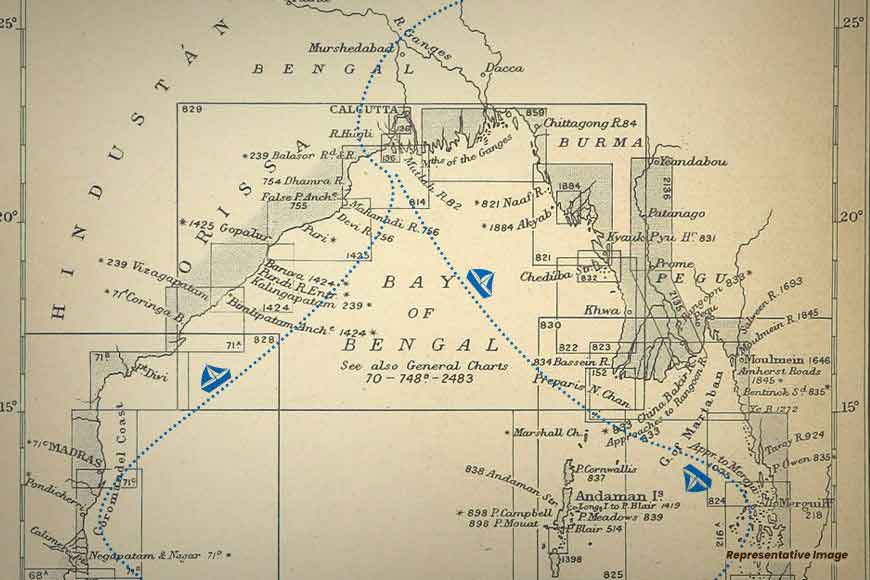
Before Kolkata was known for its trams and marketplaces, Bengal was filled with rivers, deltas, and an infinite coastline on the Bay of Bengal. Not only did its waters serve as a sources of fish, but they also serve as trading routes, routes for adventure, and sometimes even routes for violent confrontation. Ancient Bengal was no merely a region; it was a thalassocracy, a kingdom that arose to power by mastering the sea.
Yet, Bengal remained loyal to its own culture; and with products and ideas from other parts of the world coming in, the people continued to have their festivals, speak their own languages, and practice art forms they had always practiced
A thalassocracy represents a marine empire. Unlike their inland counterparts, which depended on armies, royal fortresses and castles, Bengal's primeval rulers set out to rule the oceans. Their boats traversed rivers, bays and the open ocean, and they were delivering not only physical goods, but also ideas, culture and stories from even the most distant lands. All these aquatic expeditions enabled Bengal to flourish as a commercial hub.
Bengal's ports attracted trade merchants from across the planet. Bengal's cotton muslin fabrics - which were soft, fragile and beautiful - gained global attention and were highly desired. Merchants traded fine textiles for spices, ceramics, perfumes and precious metals from Persia, Arabia, and even some Mediterranean. Thus, the historic Silk Road facilitated extensive exchange of all these products, and served as a maritime link between even more distant markets to Bengal's rivers and sea. An indispensable hub of the world trade, Bengal flourished.
Trade encompassed more than just commodities. It was trade in peoples and ideas. Sailors and merchants returned with stories, music, and art, adding to Bengal's own experience. Cities became cosmopolitan; the same marketplace echoed in many languages; the aroma of foreign spices blended with local offerings. Art, festivals, and architecture bloomed in Bengal, while embodying the international crossroads and its own identity.
The ocean, nevertheless, was as much a blessing as it was a challenge. Pirates hung out on the coast; rival kingdoms sought to challenge their control of essential trade routes; storms would threaten fleets of trade. Bengal defended its warrior powers as a merchant empire, sought to find allies, and made bargains with the foreign kings, while it protected its own lucrative trade.

Yet, Bengal remained loyal to its own culture; and with products and ideas from other parts of the world coming in, the people continued to have their festivals, speak their own languages, and practice art forms they had always practiced. In some sense, it was an open kingdom to the outside world while also swimming in its own cultural immersion and practices.
Bengal's ports attracted trade merchants from across the planet. Bengal's cotton muslin fabrics - which were soft, fragile and beautiful - gained global attention and were highly desired.
Ancient Bengal had become one of the most prosperous regions in the world and had a cultural vibrancy, because, by controlling the sea trade, opening commercial routes along the Silk Road, and continuing its own traditions, the region became a well-regarded place, with a cultural moment. The story of ancient Bengal demonstrates the idea that commerce and identity can occupy the same space and adds dimensions to the concept that pre-civilization in the modern era, Bengal was able to experience the balance of trade and identity.
At some point, the waves of the Bay of Bengal were more than just water, as the ways carried the essence of a kingdom, waves were carrying the "spirit of Bengal," the effort of generating the muslin, and its larger culture across the globe.

